

Over the summer, I started talking publicly about a new brand I was building. At first I called it Creator Paybook, and I announced versions of it more than once while I was still figuring out exactly how to position it.
The truth is, the name I had in the back of my mind all along was FU Money Plan. I hesitated because I worried people would focus on the name instead of the idea. Eventually I decided to stop tiptoeing around it and just use the name I actually wanted.
At first, I planned to keep FU Money Plan separate from my existing business. Then last week I changed my LinkedIn profile completely and went all in.
Scary? A little. Exciting? Very.

From the outside, it probably looked like a sudden pivot. It wasn’t. This has really been nine years in the making.
New here? Subscribe to FU Money Plan for practical ideas on building more income, ownership and options—without creating another job for yourself.
No get-rich-quick nonsense. Just smarter ways to build more control over how you work and earn.
At 38, I found myself unemployable.
I had spent years in marketing, become CMO and co-owner of an eight-figure agency, and worked with brands including Apple, HP, Google, Samsung, and Sephora.
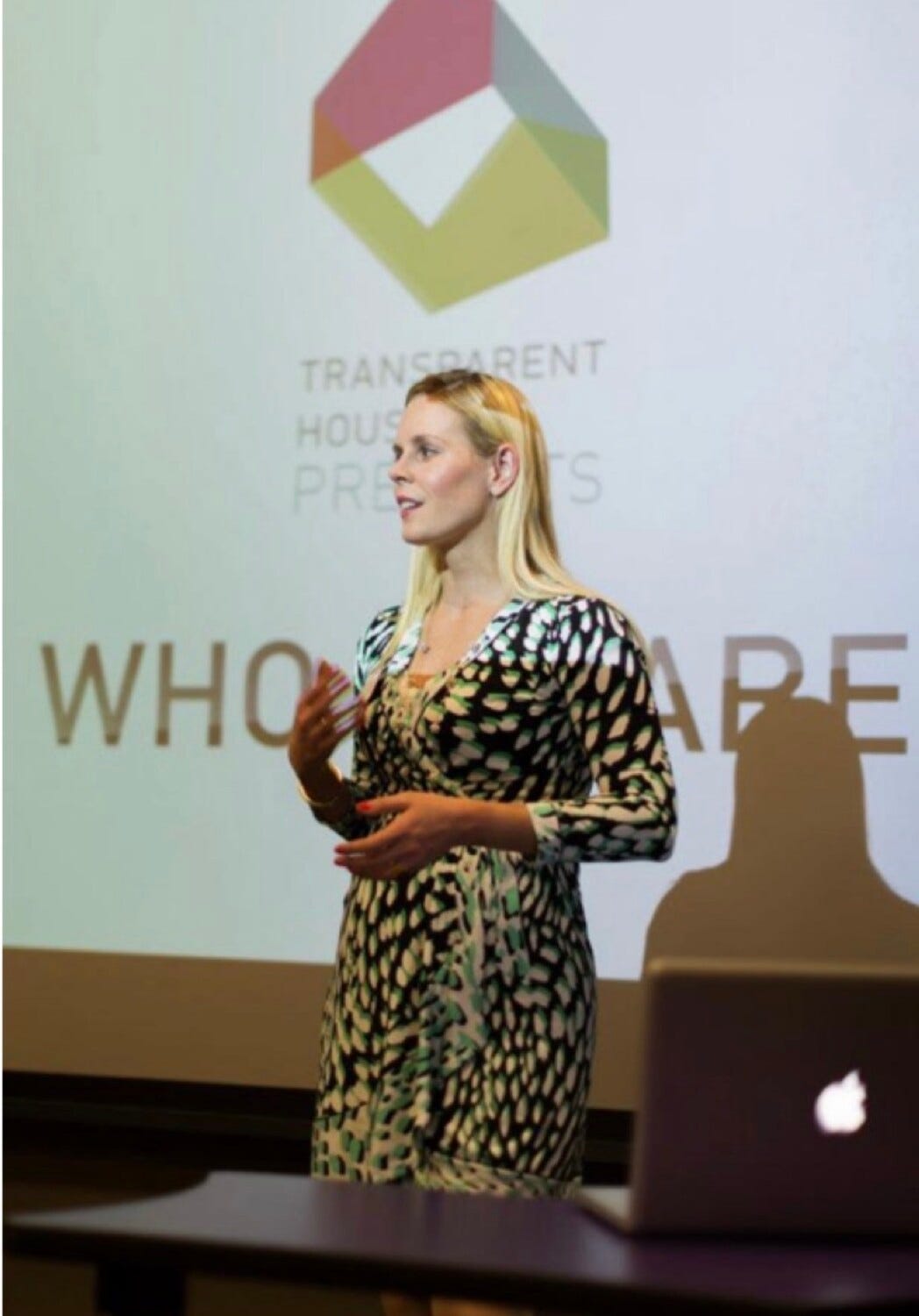
Then my life changed. I got divorced, sold my shares in the agency, and decided the responsible thing was to find a full-time job.
I took the search seriously. I hired three career coaches, rewrote my résumé, learned LinkedIn, networked constantly, went to events and coffee meetings, and submitted more than 200 applications.

That period did a number on my confidence, but it taught me something I hadn’t understood before: a surprising amount of my professional reputation had been attached to my title, my agency and the companies I worked with.
I was reminded of that recently when I wrote about a moment six weeks after leaving my CMO title, when someone who used to take my calls immediately didn’t even recognize my name. That was when I started to understand how much visibility had belonged to the title rather than to me.
When your title disappears, you find out very quickly how much of your professional value actually belongs to you—and for many people, the uncomfortable answer is very little: no IP, no audience, no independent income, nothing that can leave with you.
I had to figure out how to replace my income outside a 9-to-5. Over the years I tested 12 income streams and made six business pivots across consulting, products, courses, communities, fractional work and other experiments.
Some worked. Some were terrible ideas.
An expensive education, basically.
I found my way through it, but I never really stopped thinking about the 38-year-old version of me who had absolutely no idea how any of this was going to work. A mother of four, trying to get through one day at a time. Too young to retire, too many responsibilities to simply stop, and nobody else financially responsible for getting me through it.
And I know I’m not some bizarre edge case.
People hit their own version of that moment every day: a layoff, divorce, burnout, a baby, a major client disappearing, a business changing, a career that felt secure right up until it wasn’t.
The advice I received during those years wasn’t especially useful either:
“Get another job.” “Get remarried.” “Get a real estate license.” “Open an Airbnb.”

Most of us don’t think seriously about having options until we need them immediately. We were raised to believe that the stable paycheck was the safety plan.
Right up until somebody else turns it off.
The Person I Think About Most
Whenever I think about why I’m building FU Money Plan, I think about my mom.
She was a brilliant academic and a world traveler. She wanted to teach English abroad and write children’s books that would be translated into other languages. But eventually she came home, took a job at the post office, and kept telling herself, “One day.”
One day she would travel again. One day she would write the books. One day she would do the things she really wanted to do.
That day never came.
And I was her daughter, watching it happen.

I wrote about her recently on LinkedIn because she is still one of the people I think about most when I think about FU Money. Read the post about my mom. ❤️
She didn’t need some fantasy version of wealth. She needed more choices. More room to say, I’m going to do this now instead of someday.
As a kid, it broke my heart watching her work that hard and still have so few choices. I think that stayed with me more than I realized.
Going back to a full-time job after having a baby because you want to is one thing. Having to go back because there is no financially viable alternative is very different. The same goes for staying in a job you hate, keeping a client you can’t stand, or postponing something you care about because you simply don’t have enough options yet.
That is why FU Money Plan is so personal for me.
I want people—and especially women—to have more ways to earn, more things they own, and more room to make decisions without one paycheck deciding everything.
What FU Money Actually Means
Let me clear up one misconception early.
FU Money does not mean becoming so rich that you never have to work again while you sit on a beach congratulating yourself.
It also doesn’t mean building 11 income streams and somehow working twice as much as you did when you had one job.
And it definitely doesn’t mean rage quitting on Friday and hoping you figure out the money part on Monday.
None of those sound particularly free to me.
My definition is much simpler:
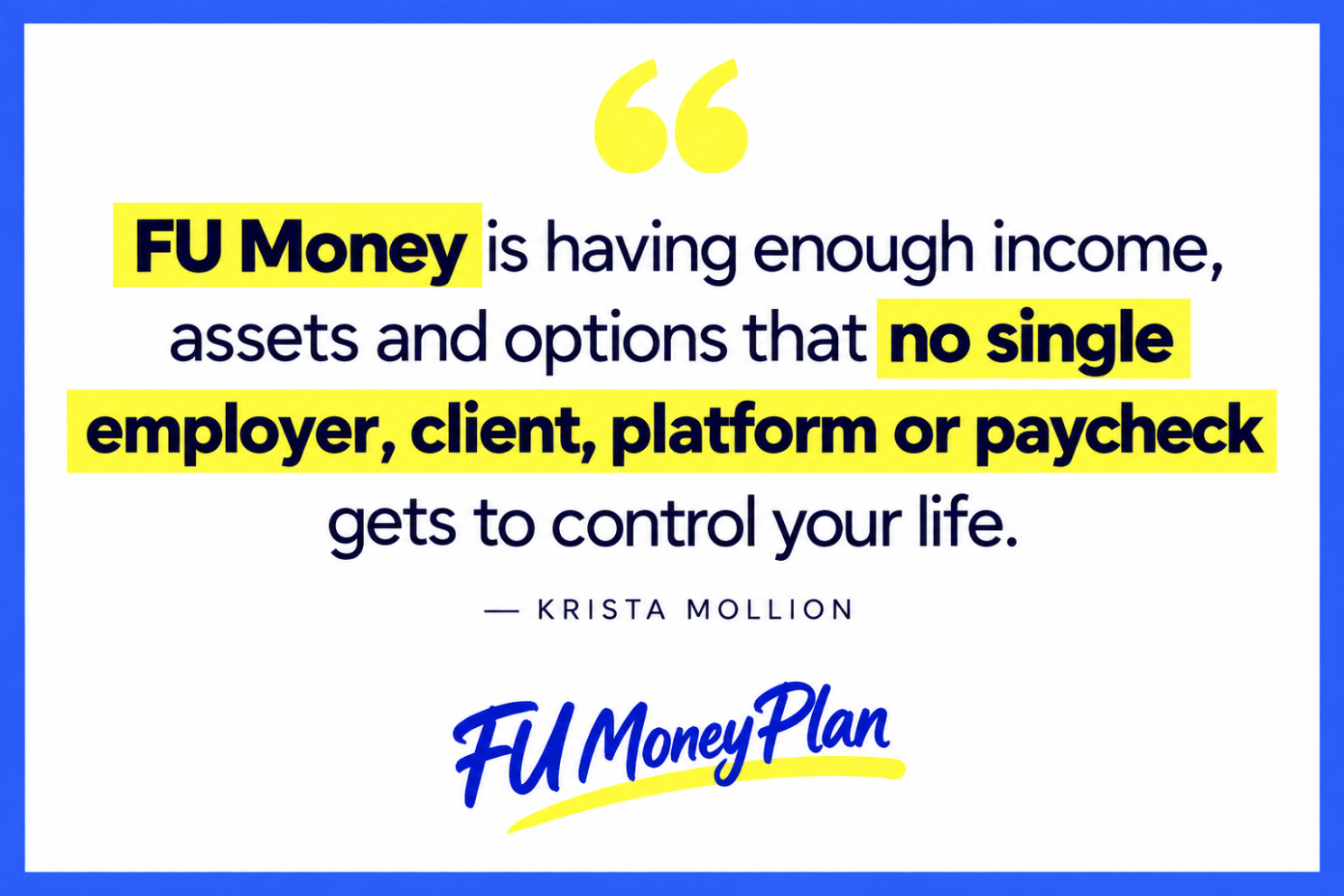
You may still have a job. You may consult. You may have active income and work very hard at something you genuinely enjoy.
The important part is that you have other ways forward.
If the job disappears, you’re not starting from zero. If a client becomes unbearable, losing them doesn’t wreck your finances. If you want to pause, change direction or say no to something, you have enough room to make that decision based on what you want rather than what you desperately need to do for money.
That’s FU Money.
The Most Dangerous Career Number Is One
You can earn $200,000 a year and still be in a surprisingly fragile position if all of it comes from one employer, one major client, one paycheck or one platform.
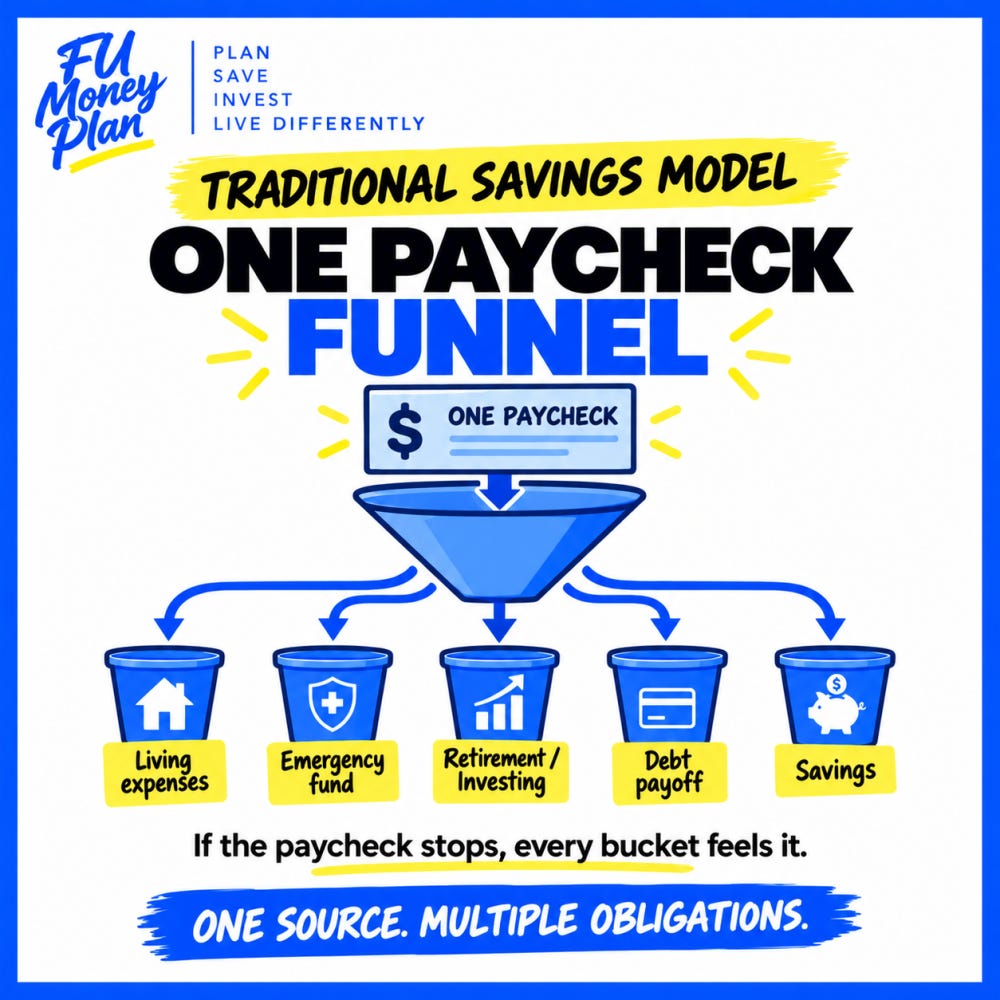
The more useful question is: what happens if that income disappears tomorrow?
Would it be inconvenient, or would it immediately change every financial decision you make?
We spend a lot of time thinking about how much we earn and not nearly enough thinking about how dependent we are on where it comes from. I wrote a full piece about this recently — The Problem With Building Your Entire Financial Life Around One Job — because a paycheck can look stable right up until the day it isn’t.
And the problem doesn’t magically disappear when you become self-employed. You can leave one employer, start consulting and still be just as exposed if one or two clients account for most of your revenue. Build an online business almost entirely on one platform and you’ve recreated the same risk with a different logo.
The goal of FU Money isn’t necessarily to quit your job or stop doing client work.
The goal is to make sure no single source has too much power over your life.
That’s what I mean by reducing the risk of one.
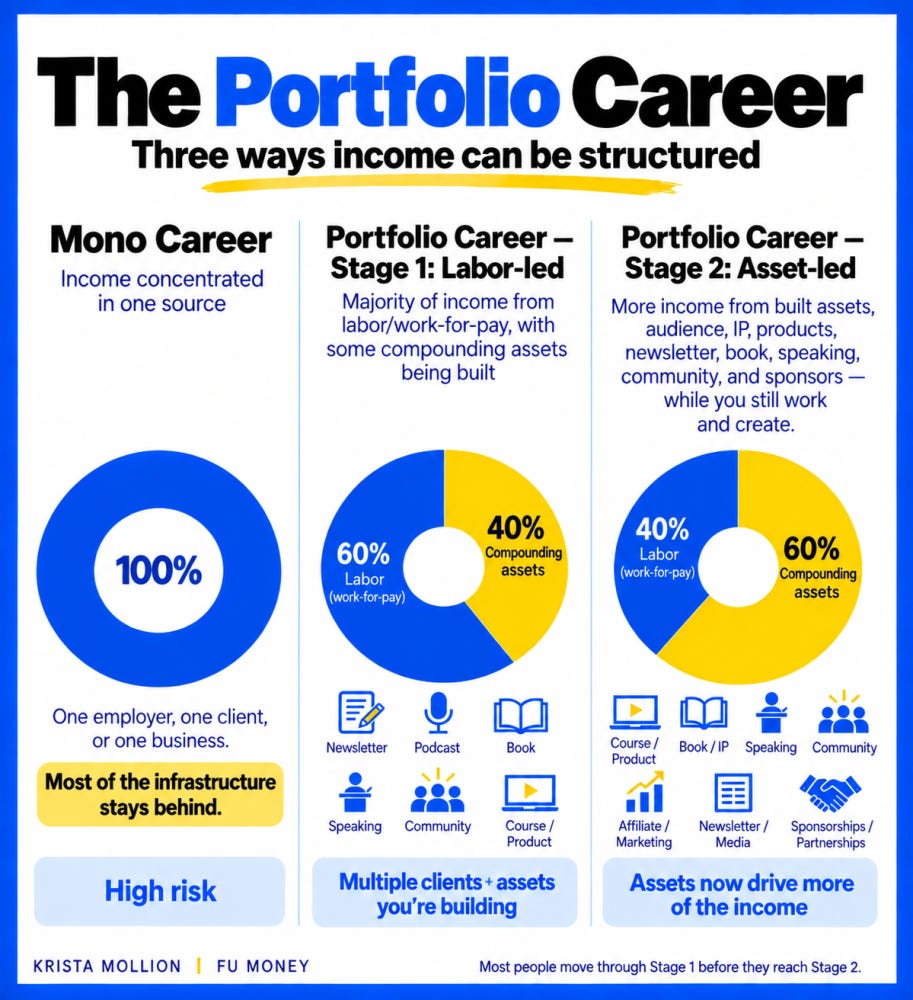
This is where the idea of a portfolio career becomes useful. I don’t mean collecting five jobs. I mean building a working life around a mix of expertise, reputation, relationships, owned assets, outside opportunities and income, so your livelihood doesn’t rest entirely on one institution.
I wrote much more about this in The New Job Security Is a Career Portfolio. The New Job Security: The Career Portfolio.
You Probably Already Have More Value Than You Think
If you’ve been working for 5, 10, or even 30 years, you’ve probably built up a lot more value than your résumé shows.
I mean the problems you know how to solve, the mistakes you can spot before they happen, and the decisions you can make quickly because you’ve already seen some version of the situation ten times before.
You probably have processes you don’t even think of as processes anymore. Ways of working that feel obvious to you because you’ve been doing them for years.
That’s career capital.
The problem is that most of us build it inside somebody else’s business. We bring our experience, judgment, ideas and relationships to the job, help build the product, team, processes, client relationships or brand, and when we leave, most of what we helped create stays there.
That’s when a lot of senior people have a pretty uncomfortable realization:
I know a hell of a lot. But what, exactly, do I own?
Take the title away and now you have to figure out what people would pay you for outside that company.
For most experienced professionals, there is plenty. Maybe it’s deep knowledge of a market. Maybe you’re unusually good at fixing one very specific problem. Maybe you’ve developed a way of making decisions that saves companies months of trial and error.
Sometimes the valuable part is narrow. Sometimes it’s the weird combination of several things you’ve learned over the years.
Find the part that travels with you.
But there’s another problem: having expertise doesn’t automatically mean the market knows you have it.
I built one of my businesses, The Recognized Founder, around exactly this problem. I call the distance between the reputation you’ve earned and the reputation the market actually sees your Recognition Gap.
That’s also why visibility and demand are part of the FU Money Plan. Once you know what you want to earn, what you want to sell and how you want to work, people still have to know you exist—and understand what they can hire, buy or refer you for.
I wrote much more about that in The Recognition Gap: Why Credible Founders Stay Invisible. The Recognition Gap: Why Credible Founders Stay Invisible.

So What Can You Build That Stays With You?
At first, you’ll probably still need active income. That might come from a job, consulting, advisory work, client projects or some combination of those things.
Active work does two useful jobs: it pays you now, and it shows you what may be worth turning into something you own later.
Because the work is often where your best ideas come from.
You start noticing the same questions people ask you. The same problems you solve. The same process you keep using. The same advice you give over and over. The same things people are willing to pay you for.
Some of those things can eventually become what I call authority assets: things built from your expertise that belong to you and can keep creating value beyond the original piece of work.
A framework. A diagnostic. A methodology. A workshop. A newsletter. A book. A course. A template. A tool. A community. Even a body of ideas people begin associating with your name.
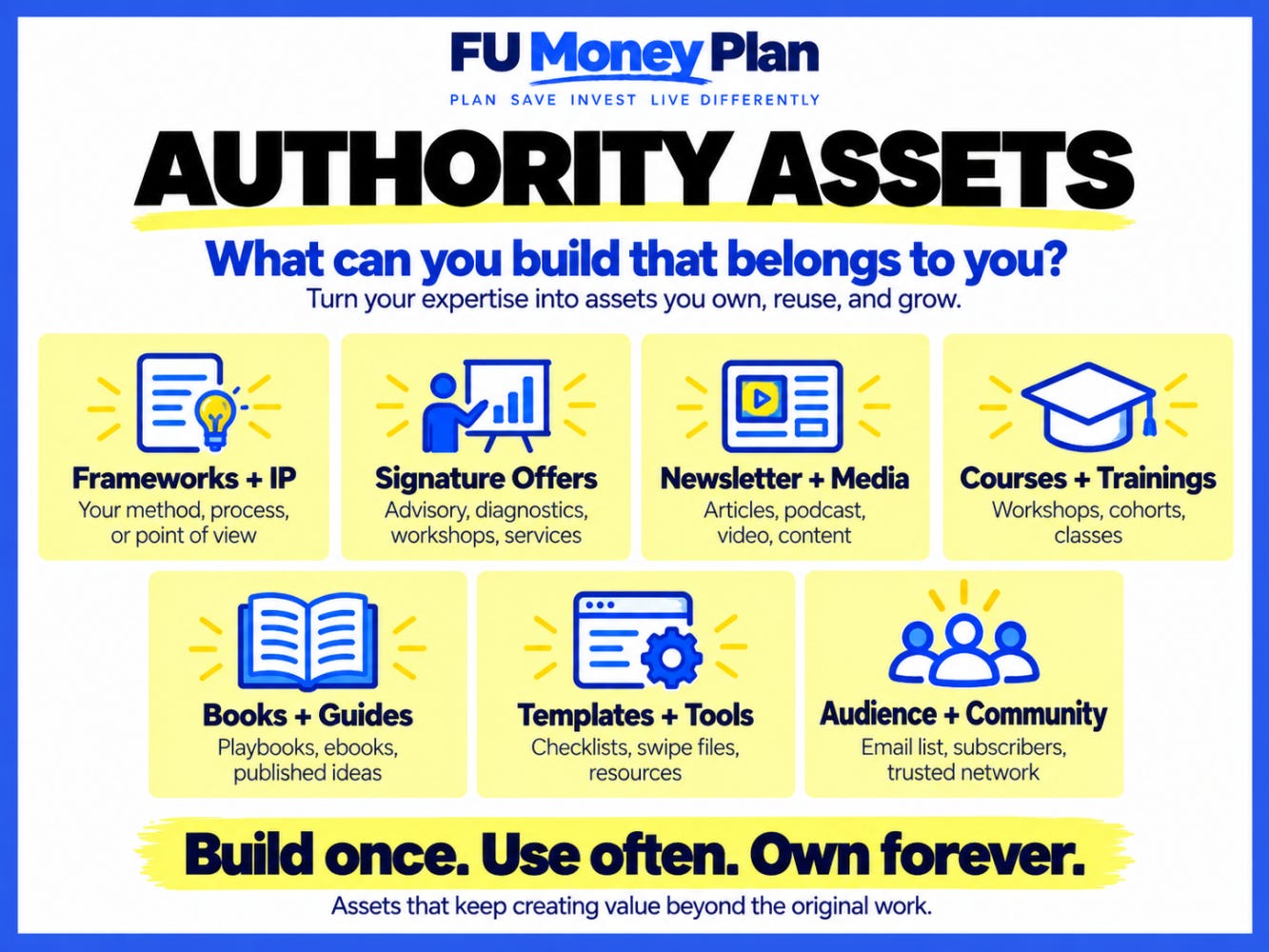
They usually don’t begin as beautifully packaged intellectual property. They grow out of doing the work, noticing what repeats, and gradually turning that knowledge into something you can use more than once.
The Awkward Question: Will Anybody Pay?
Eventually every idea has to survive one fairly brutal test:
Will somebody pay for it?
I recently asked both my LinkedIn and Substack audiences what they were struggling with most, and the same answer came up in both places: finding people who will actually pay.
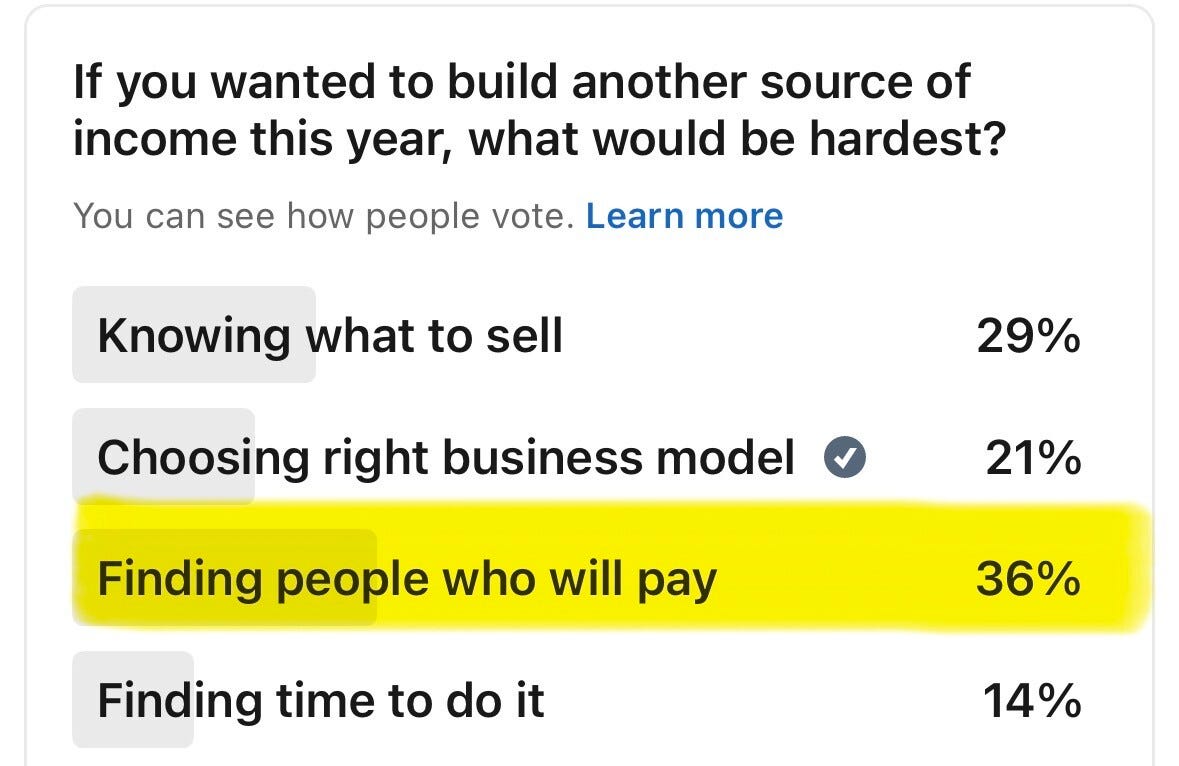
During the live, people were basically saying, Okay, Krista, enough theory. Where do I find the clients?
Fair question.
But I think people jump to client acquisition too quickly.
Before worrying about where to find buyers, you need to know exactly who needs what you do and what is happening when they finally decide the problem is worth paying to solve.
“Business owners” is too broad. So is “executives” or “women over 40.”
I want to know what’s going wrong, what they’ve already tried, how long they’ve been putting up with it, and why they would spend money on this now instead of six months from now.
Once you know that, marketing gets easier. You’re no longer staring at everyone wondering whether they could somehow become a client.
Your content gets easier too because you can stop trying to be vaguely useful to everybody.
That’s when someone reads something you wrote and thinks, Yes. This is exactly where I am.
I also think people wait far too long to test whether there’s real demand. They build the offer, website, course and funnel first, then finally start talking to buyers.
I’d rather know much earlier.
Maybe the problem isn’t urgent enough. Maybe you’re talking to the wrong person. Maybe they want the result but hate the way you packaged it.
All of that is useful information before you spend six months building.
And a big audience doesn’t automatically fix this. People can follow you, like your posts, subscribe to your newsletter and still never buy anything.
Attention is useful. Demand pays the bills.
At some point, you need evidence that your expertise solves a problem someone cares enough about to spend money on.
What Will It Cost You in Time?
Finding something people will pay for solves one problem. It can create another one pretty quickly.
I’ve seen experienced professionals leave demanding jobs because they want more control, then recreate almost exactly the same situation with clients. Now they have sales calls, delivery calls, proposals, revisions, follow-ups, admin, content and several people who all think their project should come first.
On paper, they have more income streams.
In reality, they’ve built themselves several jobs.
That’s exactly what I don’t want FU Money to become.
If you’re already working hard in a full-time job, I’m not going to tell you to go home and spend every evening building another full-time business.
This is also why I’m cautious about the phrase passive income. A lot of passive income is remarkably active while you’re building it. Sometimes afterward too.
I’m much more interested in leverage: gradually separating at least some of your income from the number of hours you personally have available.
You can still have a job. You can consult. You can do hands-on work you enjoy and get paid well for it.
I just don’t want every new dollar to require another completely new chunk of your time.
Because if building more income takes every evening, every weekend and all of your mental space, I’m not convinced you’ve improved your life very much.
More money at the expense of your entire life is a lousy FU Money Plan.
That’s FU Money
The name is cheeky. The idea behind it is practical.
You may stay in your job because you like it. You may leave. You may turn down the client who looks like trouble, take a break, change direction or give yourself time to work out what comes next.
Savings and investments matter. So does income. But I don’t think FU Money is simply a magic number sitting in an account somewhere.
I want to know that if one source disappears, I have another way to earn. That I know what people will pay me for. That I’ve built some things I can take with me. And that not every new dollar requires another hour of my life.
Most of us spend decades creating value for companies and clients.
Eventually it’s worth asking:
How much of what I’m building actually stays with me?
FU Money means having more than one way forward—and enough control that one job, client, platform or paycheck doesn’t get to make every decision for you.
And yes, someday it may give you the ability to tell someone to F off.
Hopefully you won’t need to use it very often.
Prefer to watch?
I recently went live for about 25 minutes to explain what I mean by FU Money, why depending on one source of income is so risky, and how I think about turning what you already know into income and assets without creating another job for yourself.
If you’d rather hear me talk it through, watch the full conversation here. 👇
How Much FU Money Do You Actually Have?
If you’re reading this wondering where you stand, take the free FU Money Assessment.
It will show you where you’re most dependent today and what you may want to strengthen first.
TAKE THE FREE FU MONEY ASSESSMENT →
https://unignorablebrands.co/assessment-signup

Want Help Building Your FU Money Plan?
This is the problem I built the FU Money Plan cohort to solve.
Over four weeks, we’ll look at what you already know, where you’re too dependent, what people may actually pay you for, and which income or business models fit the way you want to work.
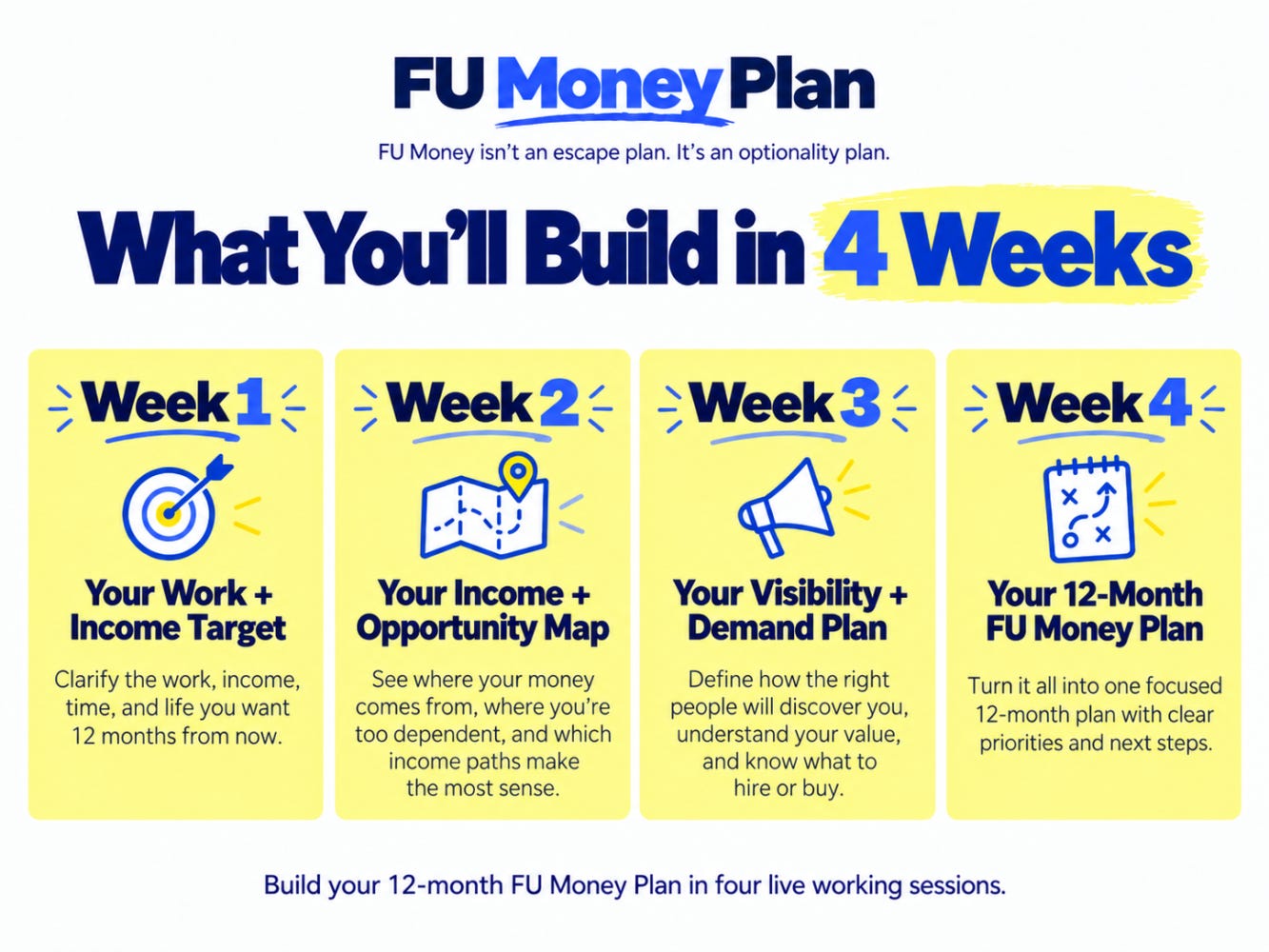
I deliberately kept it practical. No library of 47 videos. No pile of worksheets you feel guilty about falling behind on. Just 4 steps.
Each week has one main question to work through, followed by a live session where we make decisions and keep moving.
By the end, you should have a clear plan for the next 12 months: what to monetize, who it’s for, what kind of offer or asset makes sense, and what you can safely stop wasting time on.
Find out more at FUMoneyPlan.com.
If you’ve spent years building expertise and know there’s more you could do with it, but you don’t want to lose another year building the wrong thing, that’s exactly the problem we’ll work through.
I want you to make more money without giving up more of your life.
Otherwise, we’ve just created another job.
About Krista

Krista Mollion is the founder of FU Money Plan. She’s a former CMO and co-owner of an eight-figure agency who has spent more than 20 years building brands and businesses, working with companies including Apple, HP, Sephora and Samsung.
She has tested 12 income streams and made six business pivots across consulting, services, products, courses, communities and fractional work. FU Money Plan grew out of what she learned along the way: how to turn experience into income, IP and assets you own without simply building yourself another job.
Follow Krista on LinkedIn and subscribe to FU Money Plan on Substack for more on building income, ownership and options without giving up your life to do it.
Questions? Send me a DM or email to hello (at)unignorablebrands.co